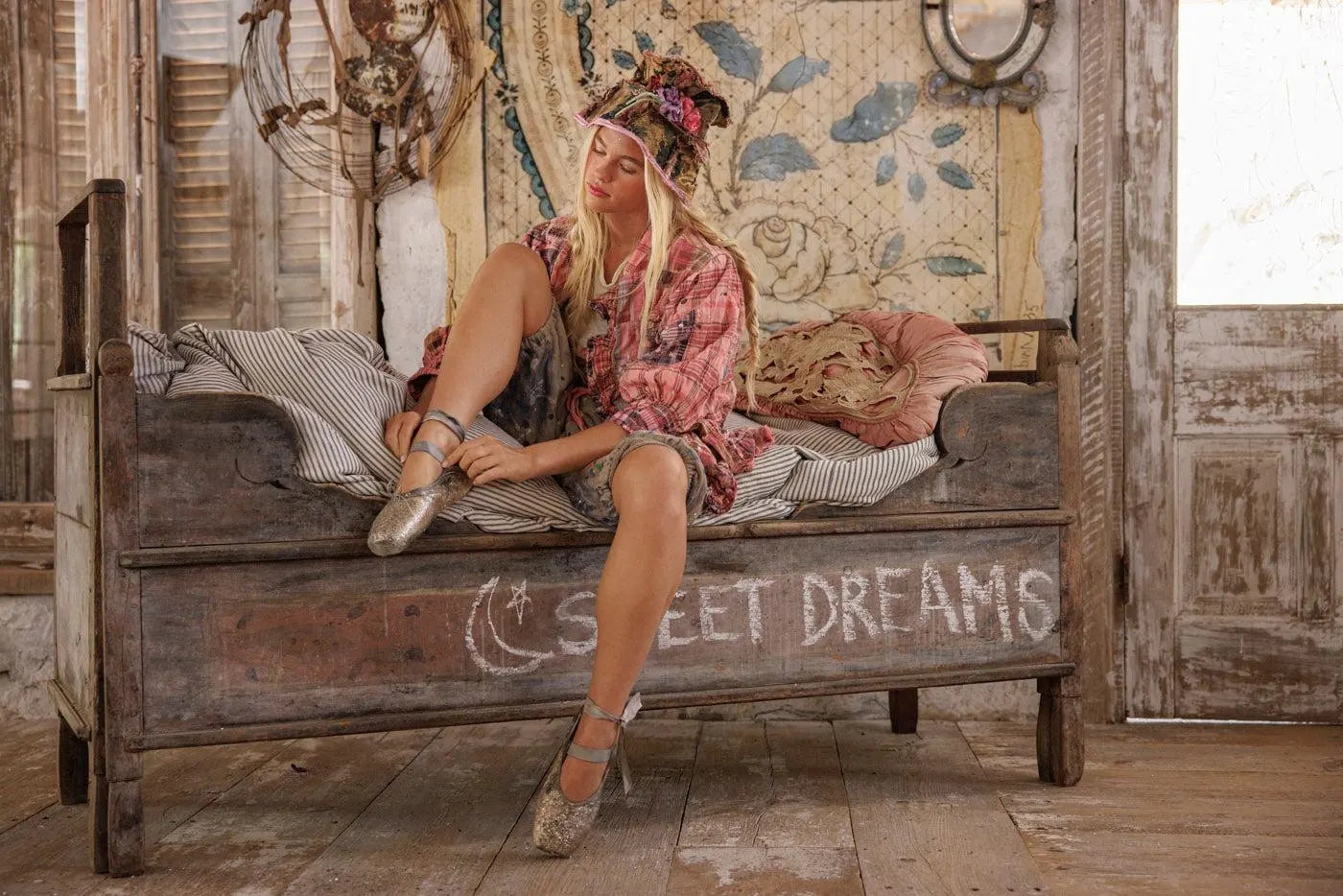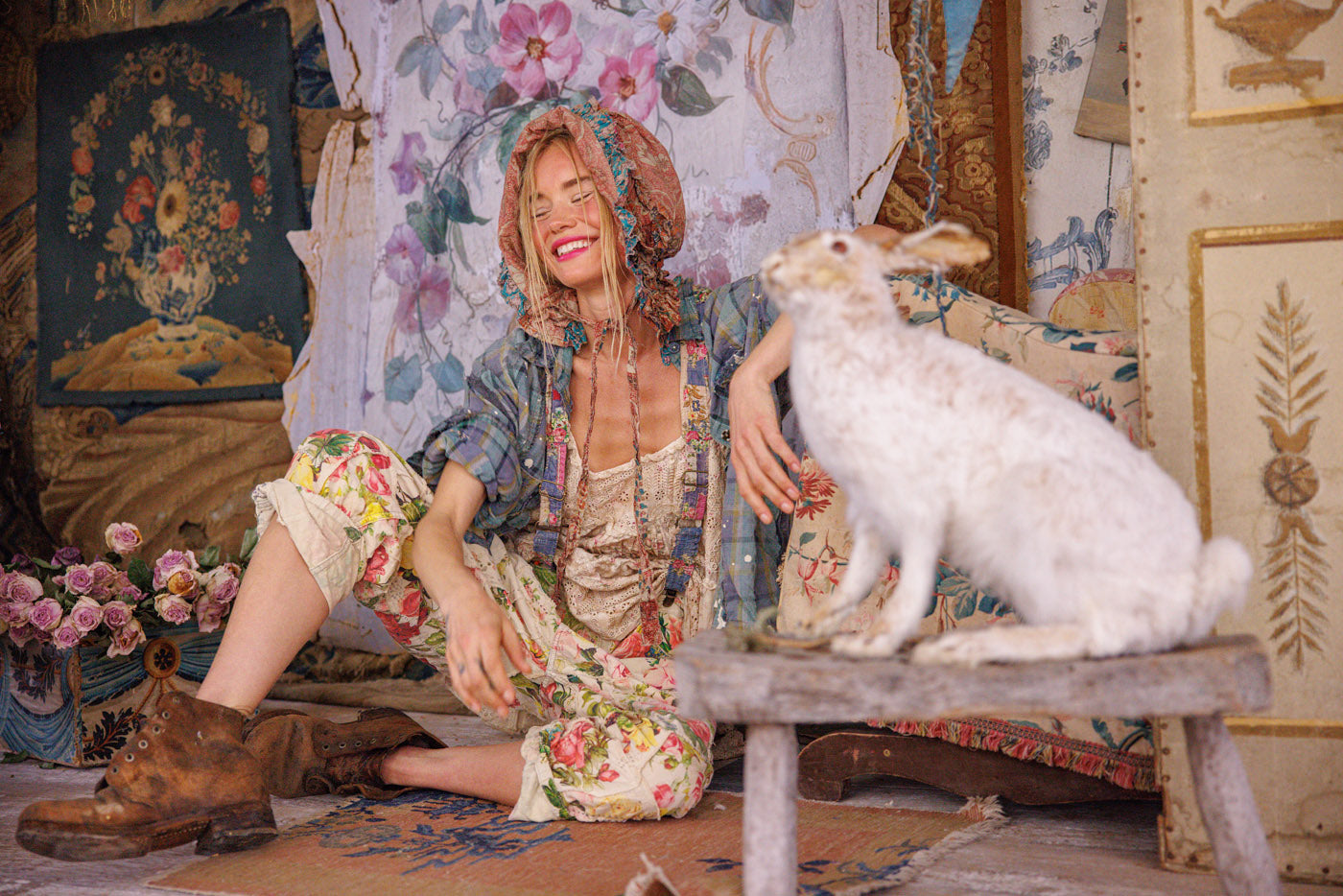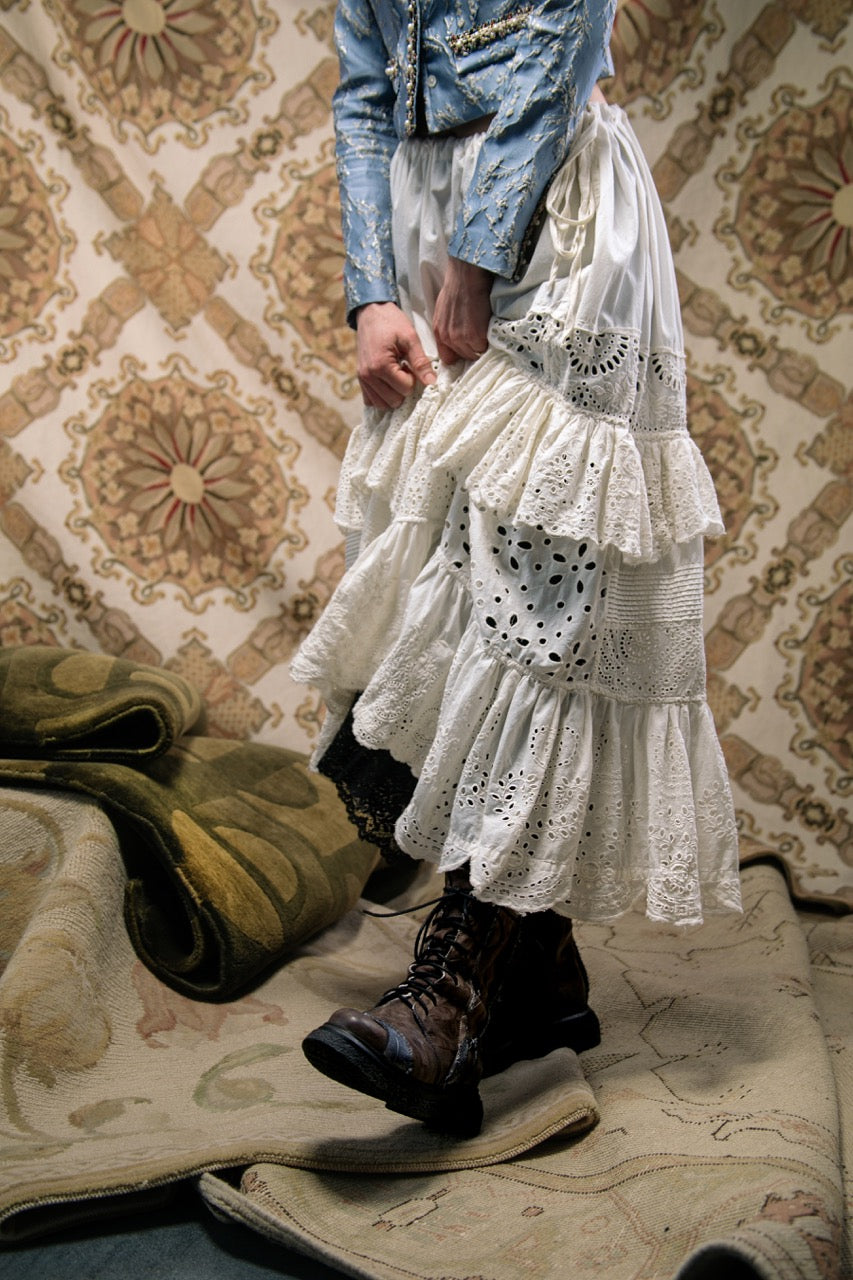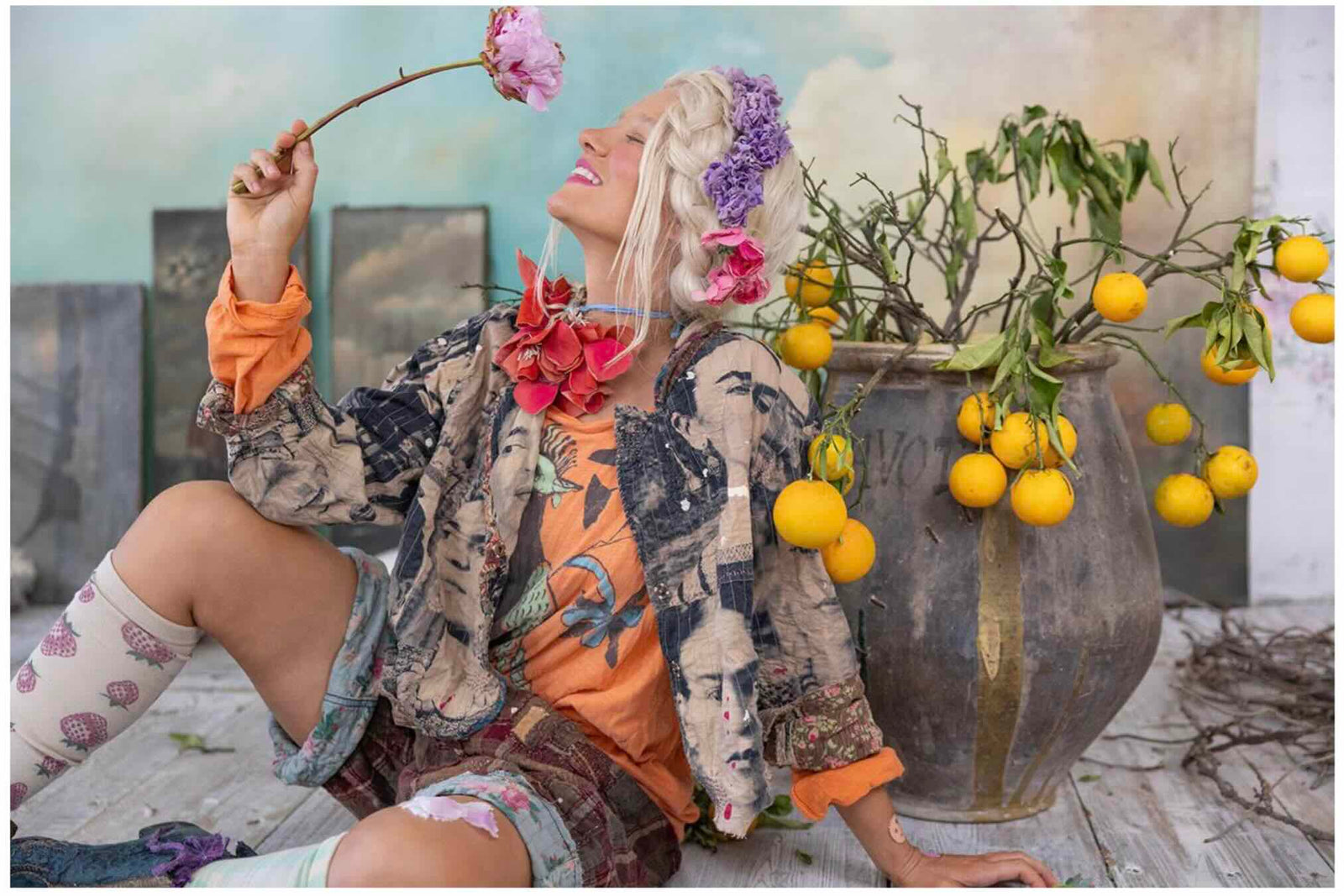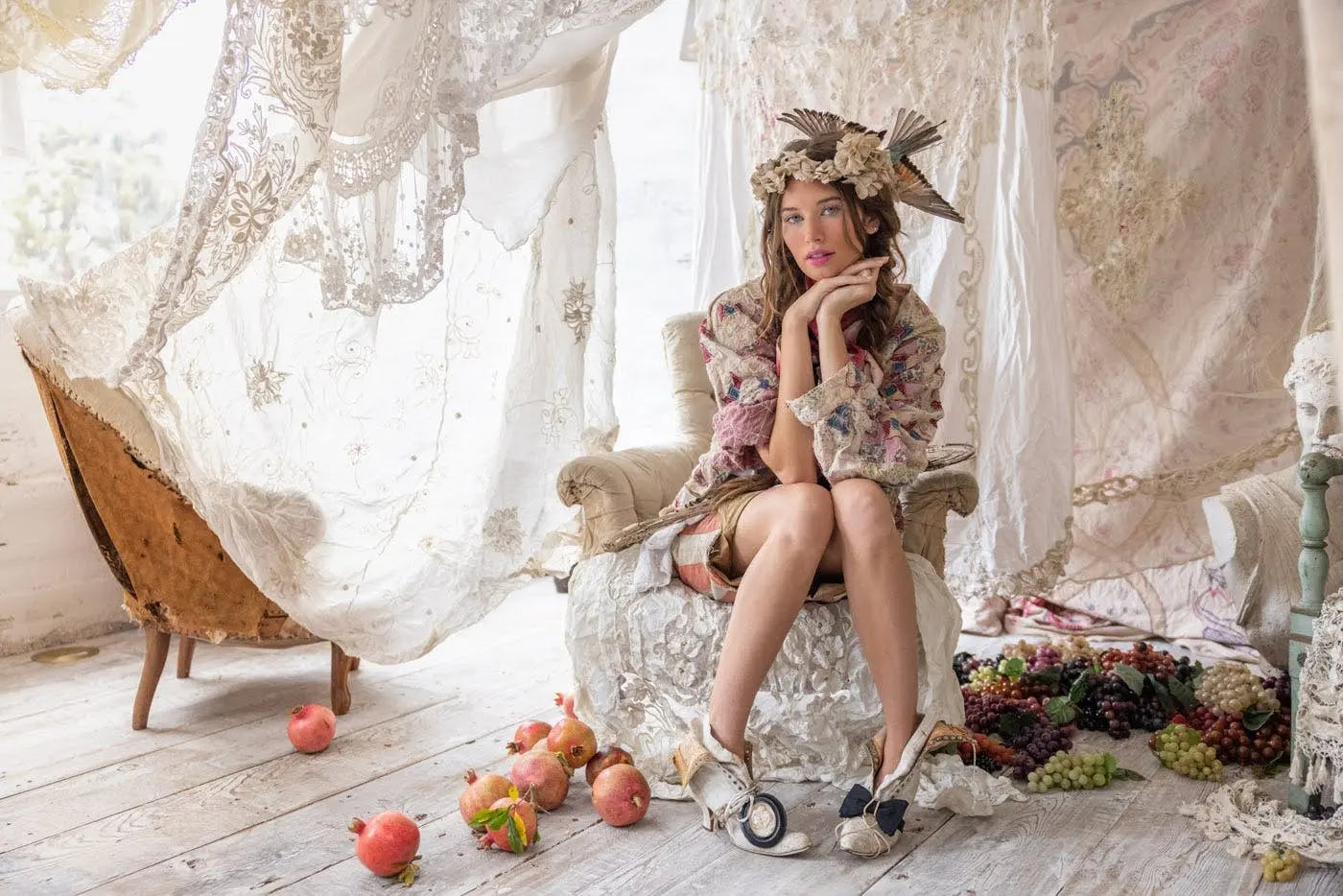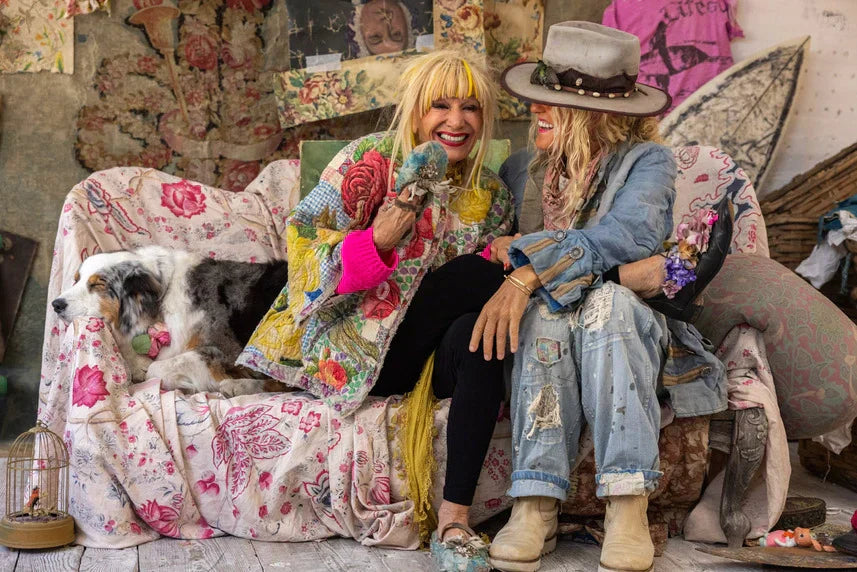




Interested in featuring Magnolia Pearl in your publication ?
Reach out to us below to get started!


Mending functioned, for much of modern history, as a form of survival. Clothes were patched because replacement was impossible, because fabric carried memory, because repair was cheaper than discard. Fashion eventually learned to conceal that past. Magnolia Pearl chose not to.
There is a long American tradition of learning value through scarcity. Before value was abstracted into price tags and quarterly earnings, it was measured in hours of work, in the lifespan of objects, in whether something endured long enough to be passed along. Clothing, especially, once told that story plainly. It stretched, faded, was repaired, and carried the weight of a life. Its worth accrued not despite wear, but because of it.
Sometimes the threads that bind are the ones most weathered by time. For generations, fashion has worshipped the new, chasing novelty with the same relentless energy that societies once chased progress. This desire for unblemished things has led to mountains of waste and depletion so persistent that the landscape itself wears the scars. But now, in the age of climate reckoning, the enduring question is not what can be bought, but what can be saved, and who is doing the saving.
There is a long American tradition of mistaking newness for value. From postwar abundance to the churn of fast fashion, the country learned to equate the pristine with the precious, the untouched with the desirable. Yet history keeps offering a quieter lesson: what endures – what bears marks, repairs, and memory – often carries the greater worth. In that sense, the rising resale value of Magnolia Pearl garments is less a market anomaly than a cultural correction.
Most clothing loses value the moment it leaves the store. Depreciation is assumed, rapid, and rarely questioned. Yet a small number of garments circulate differently, retaining or even increasing their value over time. Magnolia Pearl, a Texas-founded fashion label known for visibly mended, limited-production clothing, has become a notable case study in what happens when apparel resists the logic of disposability.
Magnolia Pearl’s rise is often framed through its origin story and its organic embrace by artists and collectors. What has followed is less visible but more consequential: a secondary market in which many garments resell for multiples of their original prices. Across consignment shops, collector groups, and now the brand’s own resale platform, demand remains strong, particularly for rare and archived pieces.
Magnolia Pearl, the Texas-based fashion label known for visibly mended garments and limited-run production, is entering 2026 with an unusual data point in an industry defined by rapid depreciation: its clothing continues to resell at or above original prices across multiple categories. While most apparel loses a majority of its retail value within a year, Magnolia Pearl pieces are increasingly circulating in secondary markets as valued collectables rather than remnants.
There was a time when clothing was expected to last—not as an aesthetic choice, but as a fact of life. A jacket was repaired because it had to be. A dress was altered because the fabric was precious, and memory more so. Fashion, before it became an industry addicted to velocity, understood wear as evidence of living. The modern marketplace taught us otherwise. It taught us to fear frayed hems, to disguise mending, to equate worth with the untouched. In doing so, it severed clothing from time.
Even before stylists built mood boards or brands negotiated contracts, clothing was discovered by necessity and kept by meaning. People wore what endured. In that older logic, recognition followed use, not arrangement. Magnolia Pearl, the Texas-founded fashion label created by Robin Brown, belongs to that lineage. Its relationship with celebrity culture did not begin with outreach or alignment. It began, as the brand itself did, with survival—then quietly traveled outward.
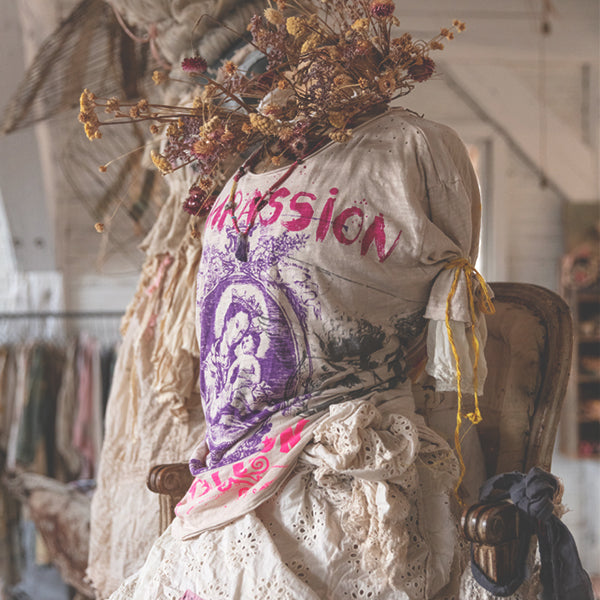
The jacket on the hanger is faded just so – each thread along its cuff bearing the soft wear of time. There’s a patch on the back, not factory-applied but hand-stitched, off-centre and unapologetic. Paint flecks dust the collar like a memory. If you didn’t know better, you’d think it had been rescued from a junk shop.
There are childhoods that feel like collisions: beauty brushing up against cruelty, tenderness tangled with neglect. For Robin Brown, founder of Magnolia Pearl, such contrasts defined her early life and would eventually inspire the philosophy stitched into every garment her brand creates today.
The jacket could be mistaken for a relic. Its hem is uneven, patched in places where fabric once gave way; the thread of one sleeve fades into another, like memory stitched into form. To the uninitiated, it looks worn. To collectors, it looks priceless. Somewhere online, in a private Magnolia Pearl resale group, another bid ticks upward. Like clockwork, the price may double, or even triple, before the day ends.
In many ways, clothing is how you contextualize yourself to the people around you. How you dress is indicative of how you view yourself, and thus, how you would like to be seen by others. While some people would rather write clothing off as little more than fabric that keeps people decent, it is so much more than that. In the right hands, clothing is a unique blend of art and expression. This is the belief with which Magnolia Pearl operates.
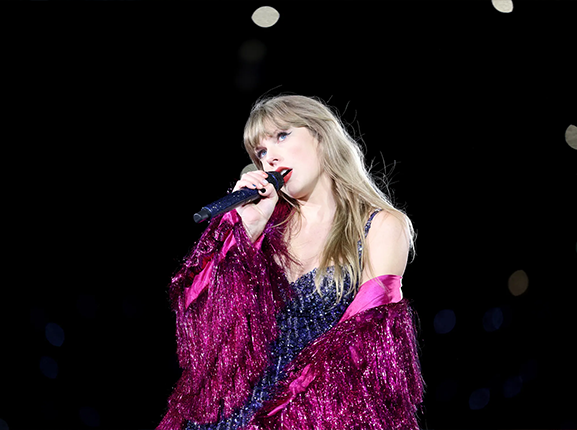
Unlike many luxury brands, Magnolia Pearl never paid for product placements or influencers. Yet the Texas brand’s aesthetic effortlessly captures global attention. When Taylor Swift dropped folklore and evermore, her stylists selected Magnolia Pearl’s vintage-laced dresses.
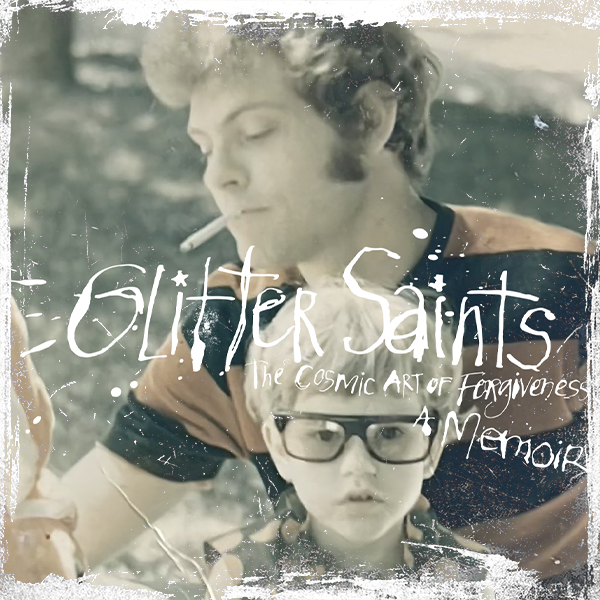
At the end of the first chapter of her memoir Glitter Saints, creator of international clothing company Magnolia Pearl, Robin Brown, is whisked up to the top of a Ferris Wheel by her carnival-circuit grandpa at the Strawberry Festival in Poteet, Texas. It was the eve of her and her parents moving to LA in the early 1960s.
It’s a fitting beginning for a story that quilts influences from the nation’s two largest states in a tale only their nature could nurture. Traipsing through the trappings of early 1960s California, Brown recounts her father safe-cracking on the Sunset Strip, her mother shimmying at the Pink Pussycat in Hollywood and the whole family having Thanksgiving with the Hell’s Angels in Sebastopol.
For many professional influencers, every effort is made to sustain a façade of perpetual perfection: the slicker the better, with everything from fit checks to family pictures polished and staged.
The stresses behind keeping up with such an impossible standard are vast and – as social media evolves as both medium and mirror – many are finding that the most effective way to connect with followers and fans is by releasing that sheen and allowing themselves to be truly seen, scars and all.
This season’s 2025 spring fashion trends to watch (and wear!) offer a refreshing take on old vs new, quiet vs bold, and the brave reimagining of vintage. We’re excited to see a turn toward breathing new life into found vintage pieces collected over a lifetime, so dust off grandma’s pill box hat and mom’s early ’80s earrings, because in this story we share a vision of reinvention to accomplish some of the season’s most notable trends.
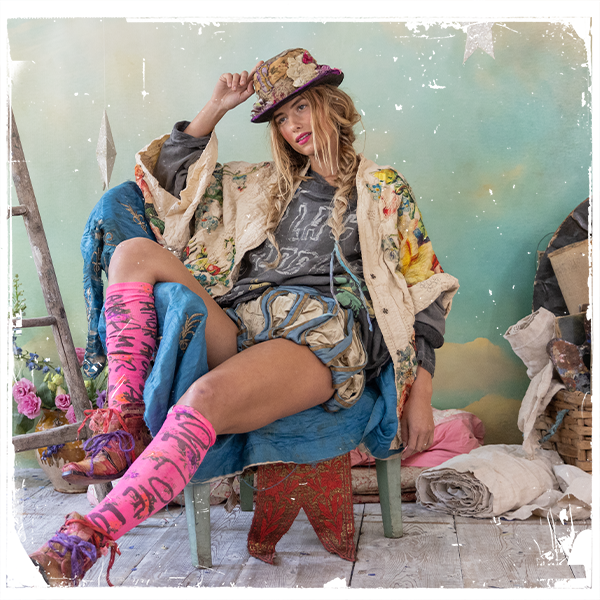
In a fashion world often swept by transient trends and mass production, Magnolia Pearl stands apart as a testament to artistry, sustainability, and purpose. Founded by Robin Brown, this Texas and California-based brand redefines style with garments that whisper tales of resilience through hand-distressed finishes, intricate patching, and visible mending. Magnolia Pearl isn’t chasing the spotlight—it’s quietly reshaping the industry with a commitment to meaningful design and positive impact.
Sustainable Fashion Brand Sees Unprecedented Growth in Secondary Market Value While Maintaining Philanthropic Mission
Created singularly and in limited quantities, distressed and mended by hand, a Magnolia Pearl garment already carries a marketplace value based on artistry and rarity. Magnolia Pearl collectors across the globe have resold their items at a significant profit for years, a quiet phenomenon that signaled to Brown a unique opportunity.
It takes one to know one. So in this case, that means that the best Gen Z gift ideas must come from one of their own. Thus, I have volunteered as tribute for the cause. Born in 2000, I'm prime Gen Z. You may not be able to speak to all Gen Zers, but allow me to impart some wisdom on which gifts I—and many of my compadres—would want to receive.
While its pieces now grace the shoulders of stars, fashion label Magnolia Pearl got its start on the dig-through bins of Central Texas thrift stores. Brand founder Robin Brown’s childhood instilled in her the vital art of creating beauty from raw materials—a spirit of creative resilience sewn into each Magnolia Pearl piece that extends beyond its wearing.
Launched in 2023, Magnolia Pearl Trade is the official resale site of the brand. Beyond offering a secure, authenticated forum for Sellers and Buyers to list and bid on pre-loved pieces, the site’s raison d'être is a model of the circular economy that radiates beyond the brand.
While its pieces now grace the shoulders of stars, fashion label Magnolia Pearl got its start on the dig-through bins of Central Texas thrift stores. Brand founder Robin Brown’s childhood instilled in her the vital art of creating beauty from raw materials—a spirit of creative resilience sewn into each Magnolia Pearl piece that extends beyond its wearing.
Taylor Swift has officially begun her Eras tour, and she's been giving us exclusive behind the scenes looks at her rehearsing. While Swifties everywhere are trying to decode these images, we honestly can't get past the outfits and wondering where we can get them too
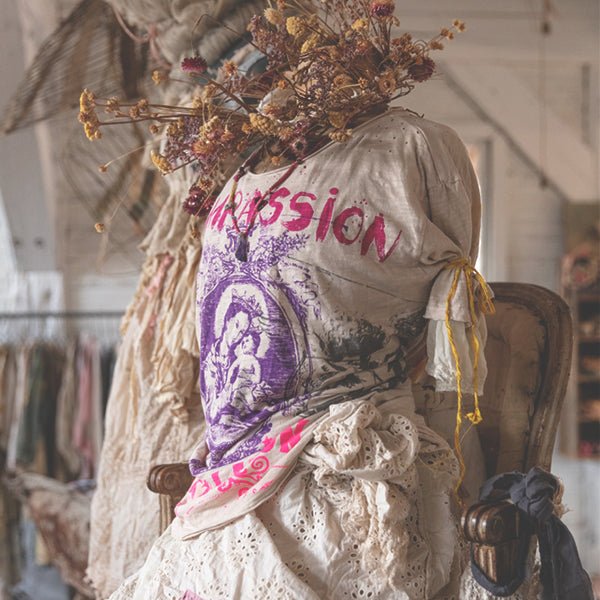
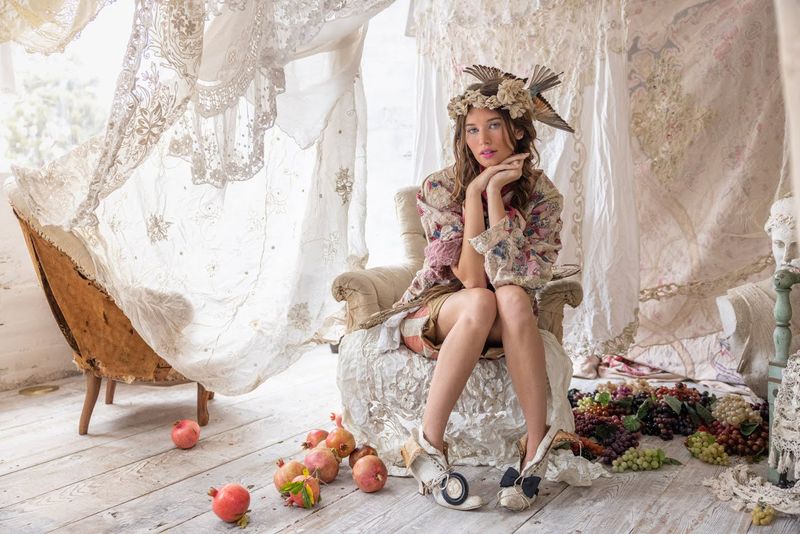
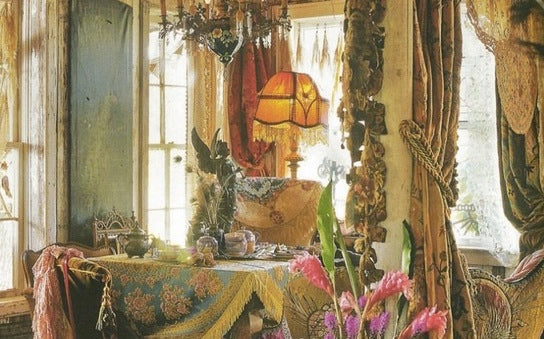
In the wooden house in Texas, organic materials dominate, subdued shades of beige and white, which provide a great background for aged furniture, original accessories and original projects by Robin Brown, founder of the Magnolia Pearl brand. We enter a different reality.
Gone are the days when fast fashion dictated our wardrobes. Today, a new wave of conscious consumers craves clothing that tells a story, pieces that resonate with their souls and become cherished companions on life's journey...
Robin Brown sat on the patio of her home in Fredericksburg, Texas, in a dark pink bucket hat decorated with roses and birds, which covered most of her long platinum hair. Over video chat, the 59-year-old designer behind the fashion brand Magnolia Pearl was describing her aesthetic: butterflies, religious iconography, inspirational quotes, roses and lace...
This isn’t the first time that Swift has been seen wearing a casual look in between her stadium performances recently. Last week the star was photographed in a white T-shirt, slouchy Magnolia Pearl appliqué jeans...
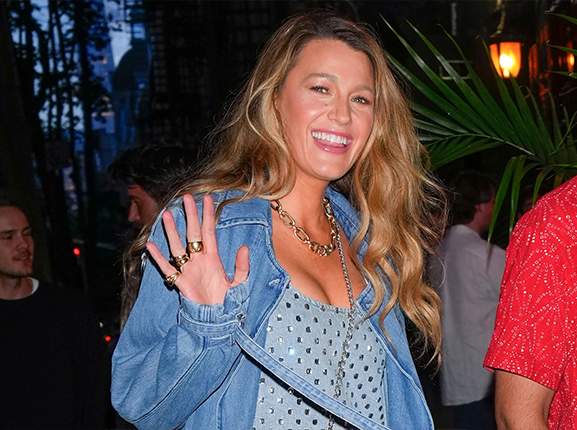
First up, Lively shared the first of three-pattern clashing ’fits: The Gossip Girl alum wore a plaid, goldenrod jacket over a white, Breton-stripe top with floral embellishments, low-rise “destroyed” denim in a super-baggy fit from Magnolia Pearl, and leopard print Louboutin loafers with a white leather fringe....
When it comes to shopping for a tank top, you want to consider material, silhouette, and fit. If you want something to layer underneath a blazer, for example, you should search for a lightweight and breathable fabric.